
Renting out your property in Curaçao
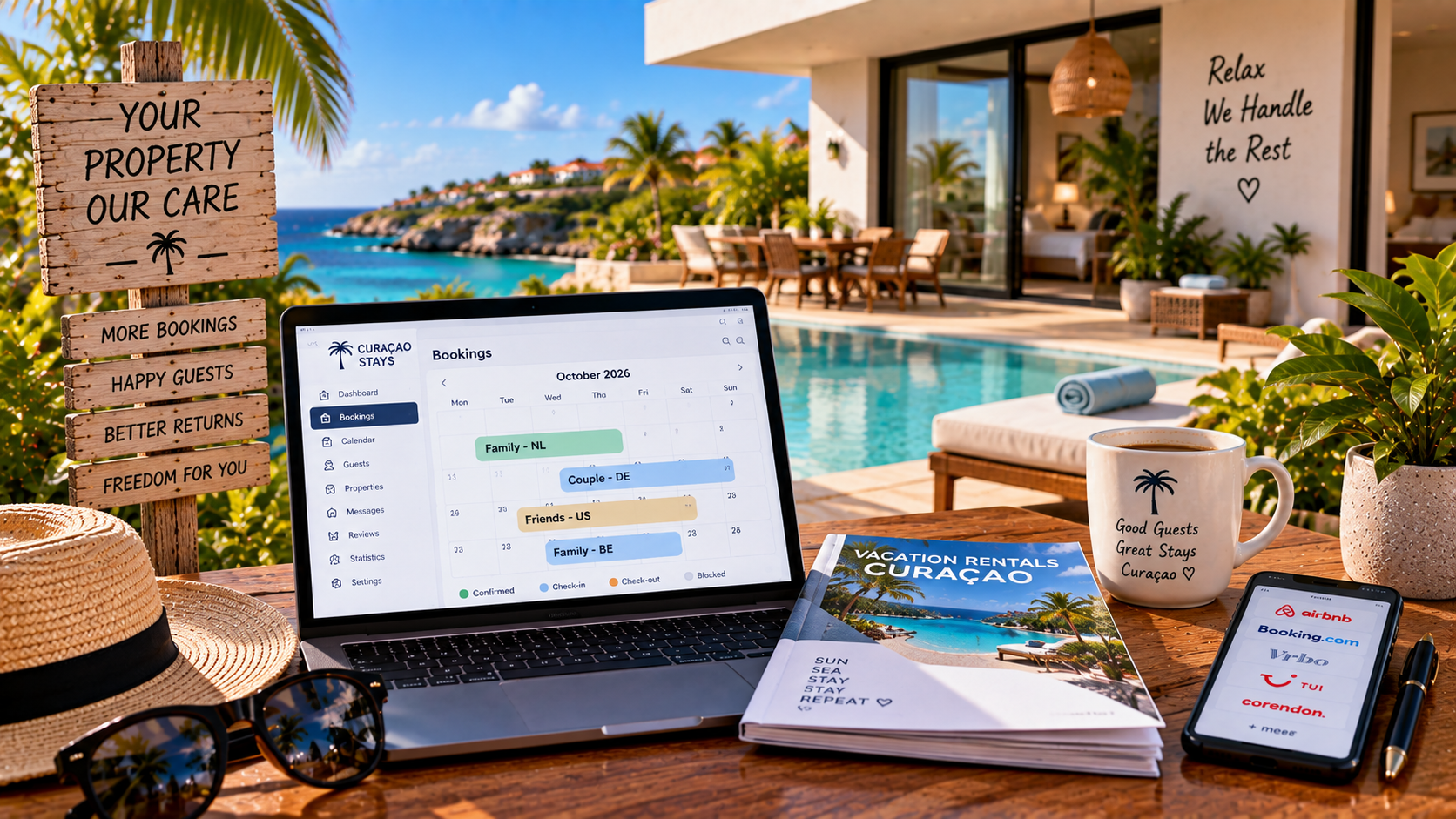
Renting out your property in Curaçao
What needs to be arranged before you start?
Renting out a property in Curaçao can be attractive - either as an additional source of income or to offset ownership costs. At the same time, rental is not something you simply "switch on".
In practice, many property owners encounter issues after rental has already started. Not due to bad intentions, but because important steps were overlooked.
Before the first booking
Registration with the tax authorities
Once you rent out a property, you are dealing with tax obligations. Depending on your situation, you may need to register with the tax authorities in Curaçao, apply for a CRIB number, and submit periodic tax filings. This applies whether you rent out privately, through a structure, or via a property manager.
CRIB number: when is it required?
A CRIB number is generally required when rental activities are considered structural rather than incidental. This is often underestimated. Applying for a CRIB number only after rental has started can lead to unnecessary delays or administrative complications. It is therefore wise to assess this before accepting bookings.
Turnover tax (OB)
Short-term rental to tourists is usually subject to turnover tax (OB). Key questions to consider: does your rental qualify as short-term accommodation? Which OB rate applies? How and when should OB be reported and paid? Incorrect handling of OB is one of the most common issues I encounter in practice.
Renting out property should be treated as a structured activity from the start, even if it begins on a small scale.
Rental in practice: management, liability and cost control
Avoiding surprises after you start renting out
Once the administrative and tax framework is in place, attention shifts to the practical side of rental. This is where costs, risks and operational challenges often become visible.
Property management and daily operations
Rental involves more than handing over keys. Think about guest communication, key handover and check-in, cleaning and inspections, maintenance coordination, and handling damage or complaints. For owners who do not live on the island, working with a reliable local property manager is often essential.
Standard home insurance is often not sufficient for rental activities. It is important to review liability coverage for guests, damage caused by tenants, and specific insurance requirements for short-term rental. This is especially relevant for vacation rentals.
Utilities and cost control
Electricity and water costs in Curaçao can be substantial. Many experienced owners therefore choose to install sub-meters (particularly for water), set clear usage rules, and correctly include utilities in rental pricing. This helps prevent unexpected costs and disputes with guests.
A common mistake
What I often hear: "We'll arrange this later - first let's see if renting works." Unfortunately, this is exactly when problems arise. Rental works best when approached professionally and proactively, not reactively.
Conclusion
Renting out property in Curaçao can be very successful - if properly prepared. By addressing registration and tax matters upfront, management and liability clearly, and cost control consciously, you create clarity, control and peace of mind.
Final note
Are you planning to rent out your property in Curaçao or reconsidering your current setup? Then this is the right moment to review everything before issues arise.