
Banking for Property Owners in Curaçao
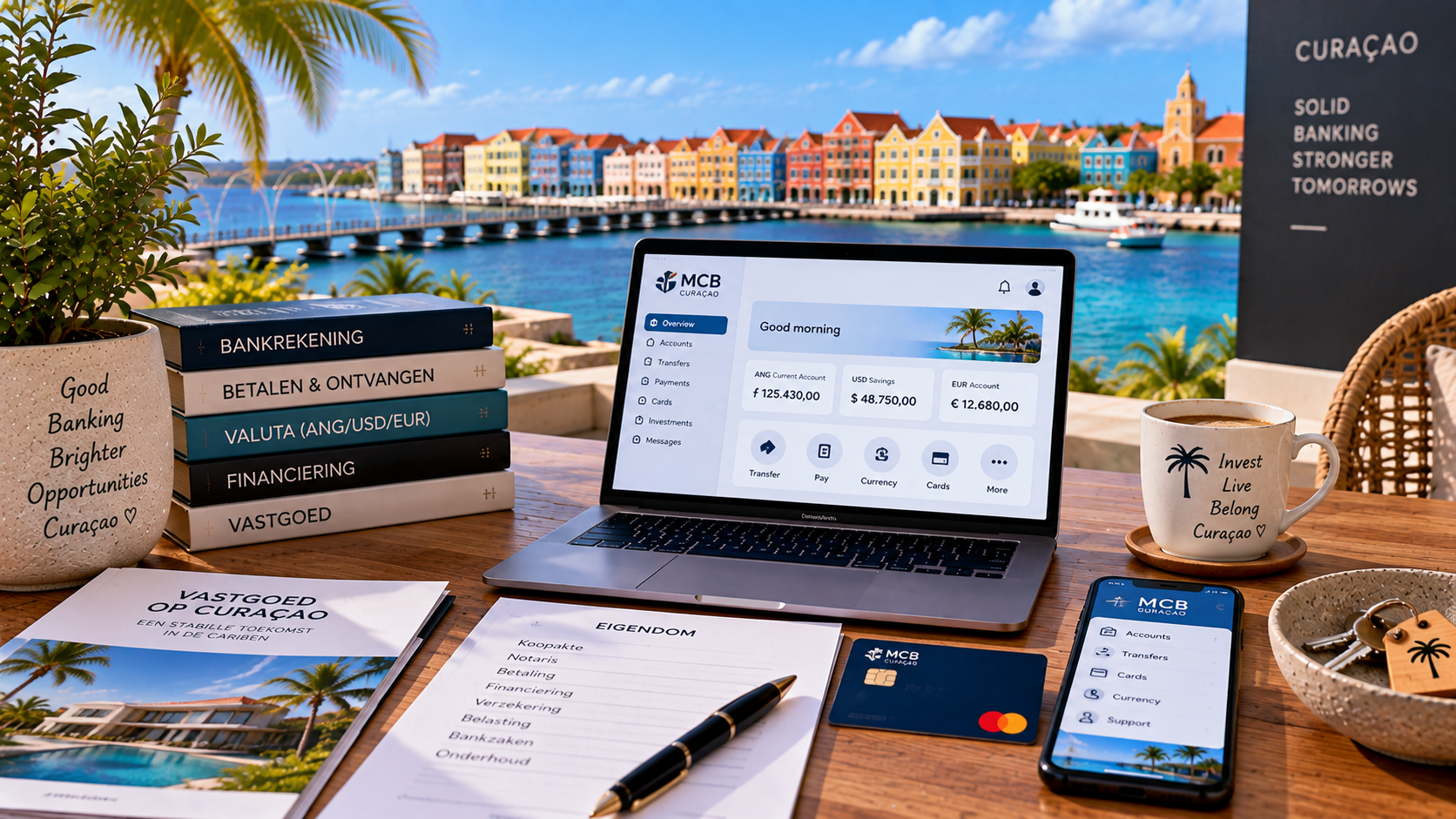
As an owner of property in Curaçao, whether you live here, spend part of the year on the island, or manage things remotely, it helps to understand how local banking works and how to transfer money between countries effectively.
Opening a local bank account
Most property owners in Curaçao choose to open a local bank account, even if they do not live on the island full-time. This makes it easier to pay local bills, such as utilities, OZB and management fees, and avoids repeated international transfers for everyday expenses.
Curaçao has several local banks, including MCB Bank, RBC Royal Bank and Orco Bank, each offering accounts for both residents and non-residents. The exact requirements and opening procedure differ by bank and can change over time, so it is worth confirming the current terms, required documentation and any fees directly with the bank of your choice before making an appointment.
Generally, banks will ask for valid identification, proof of address and, depending on your situation, additional documentation such as a CRIB number (see our separate Insight on this) or proof of property ownership.
Transferring money internationally
For international transfers, for example to fund a purchase or cover ongoing costs from abroad, owners have a few options: a transfer through their own local bank, or the use of dedicated international payment services.
Exchange rates and transfer fees vary by provider and can change over time, so it is worth comparing current rates and costs across a few providers before a larger transfer, rather than relying on outdated figures.
Managing your finances remotely
For owners who do not live on the island full-time, most local banks offer forms of online banking that let you manage accounts, make payments and check balances remotely. Even so, it can be practical to involve a local party, such as a property manager or bookkeeper, alongside your own local account, to handle routine local payments on your behalf.
In conclusion
Banking is a practical, but often underestimated, part of owning property in Curaçao. A local account, a clear understanding of the transfer options available, and clear agreements about who handles which payments help avoid unnecessary delay and cost.